
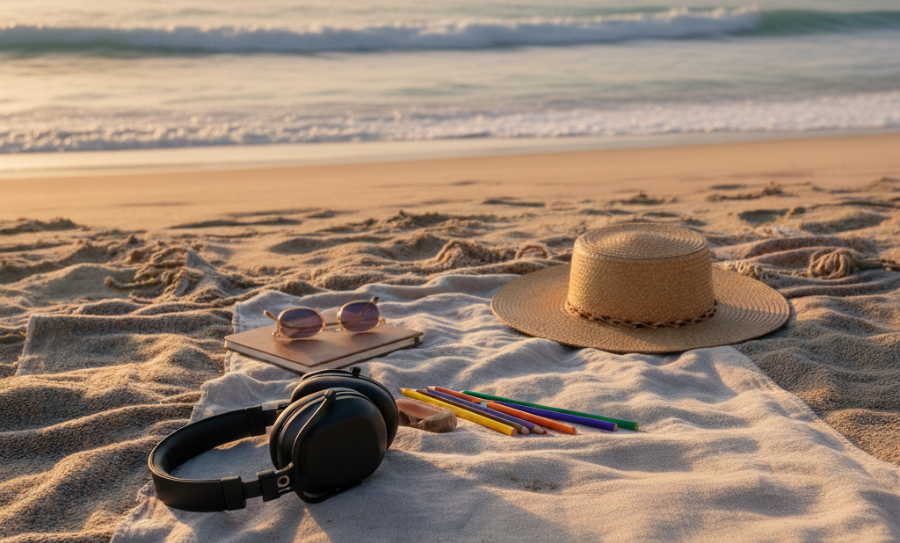
Neurodivergent Beach Rituals
Going to the beach is one of humanity’s favorite summer rituals. The warm kiss of sand
beneath our feet, the soothing sound of waves rising and retreating, the salty breeze tangling
our hair—it’s a full-sensory experience. Arguably, even the coarse rub of sand caught in our
bathing suits could be considered part of the charm (or the chaos, depending on who you ask).
But for many neurodivergent people, the typical beach day isn’t always so idyllic. The blazing
sun, the sensory intensity, and the overwhelming mix of sights, sounds, and social pressure can
be a lot.
That’s why this post exists.
This guide is for anyone who wants to reclaim the beach as a joyful, calm, and
self-respectful space. Whether you thrive on structure, need a break from the crowds, or just
want permission to stim with a seashell for twenty minutes—welcome. Let’s design a beach day
that fits your rhythm.
What is Neurodivergence?
Neurodivergence refers to the natural variations in how people’s brains process information, perceive sensory input, think, and relate to the world; for some individuals, these differences appear in subtle ways, while for others they shape their entire sensory and emotional experience. In this post, we’ll explore tools and rituals that may support people living with autism, ADHD, AuDHD (a combination of autism and ADHD traits), anxiety, PTSD, panic disorder, Tourette syndrome, sensory processing disorder, and obsessive-compulsive disorder.
These aren’t the only forms of neurodivergence, of course. The ND umbrella covers a
wide spectrum of conditions and lived experiences—diagnosed or not. While this post focuses
on a handful of examples, there are many more worth learning about. If you don’t see yourself
listed here but still feel “out of sync” with the typical beach vibe, this guide is still for you.
Pre-Beach Day Ritual
One way neurodivergent individuals may reclaim beach days for themselves is by planning a few days in advance, which can be especially supportive for autistic brain profiles or anyone who experiences distress around spontaneity. Thoughtful planning—such as deciding whether the outing will be solo or shared—can make a meaningful difference; for people with PTSD or panic disorder, bringing a trusted confidant can be essential, as episodes may be more exhausting or risky to navigate alone, while for those with autism, ADHD, or Tourette syndrome, companionship is optional but can enrich the experience when shared with people who do not drain social energy or trigger anxiety. Choosing the time of day in advance also helps, allowing individuals with ASD to adjust their routines and sleep accordingly, or to prepare for the sun intensity, crowd levels, and sensory demands of a midday beach visit; nighttime beach outings are equally valid, as quieter settings like bonfires can be more sensory-friendly, and there is no wrong time to enjoy the beach. Creating and following a checklist of needed items—such as sunglasses or noise-canceling headphones—can help manage light and sound sensitivity, and taking note of available food options ahead of time allows for bringing familiar, safe foods if beach stand offerings do not align with one’s sensory needs. This planning creates a stable routine and preventative measures for conditions like Tourettes
and PTSD.
Divergent Beach Experiences: Sensory Strategies by Condition
Everyone deserves to feel like every social locale on our beautiful planet can
accommodate them. Neurodivergent people are not meant to simply survive near the
sea–they’re meant to thrive with their needs honored and supported. Whether you’re navigating
sensory overload, attention fluctuations, panic responses, or any other wiring, this section will
offer tools to help you claim the shore with the confidence to create comfort on your terms.
This section will be divided by types of neurodivergence.
Autism:
Some autistic individuals benefit from intentional pre-planning and mindful arrivals, and beyond preparation, incorporating a sensory grounding ritual upon arrival can be deeply regulating; for example, turning off the car and sitting quietly for five minutes allows space for introspection, deep breathing, and sensory recalibration, while gentle affirmations—spoken aloud or internally—can serve as anchors, reinforcing the idea that the crowd is not your compass and that your joy leads the way.
If you arrive with someone supportive, inviting them into this ritual can transform preparation into shared presence. Once ready, claiming your space on the beach is an act of self-care—seeking areas with generous distance from others, arriving during quieter hours, or using visible cues such as a calming flag, towel marker, or visual boundary can help protect your sense of regulation. Parallel play is another neuro-affirming practice that allows connection without depletion, where being together while engaging in separate activities—sketching in the sand, reading, gaming quietly, or swimming—supports autonomy and preserves social energy.
For sensory regulation, bringing familiar soothing items such as noise-canceling headphones or trusted playlists, comfort towels or sand-resistant mats, swim shirts, sunhats or water shoes, and tactile anchors like seashells, smooth stones, or stim tools can make a meaningful difference. Above all, choosing companions who nourish your nervous system—those who respect your space, understand your rhythms, and offer grounding support through simple gestures or shared silence—is essential, and if you still resonate with the Asperger’s label, know that you are not required to mask, decode, or perform social expectations at the beach; you are allowed to experience it in your own way, in solitude or with someone who truly sees you, exactly as you are.
ADHD:
-Pack your dopamine buffet: Bring a mix of fast-paced and slow-paced options—paddleball, art
supplies, beach games, or mini puzzles.
-If going with someone, assign shared roles (e.g., “you handle snacks, I bring music”) to reduce
executive overload.
PTSD:
-Go with someone who understands your triggers and can hold space for you without judgment.
Let them know in advance what you need—whether it’s quiet companionship, grounding
presence, or someone to keep an eye out while you rest.
-Choose your time intentionally. Early mornings or evenings are often less crowded and more
serene. The lower sun, quieter vibe, and cooler temperatures can help soothe your system.
-Bring grounding tools like a weighted towel or blanket, sensory objects (smooth shells, a piece
of driftwood, or a favorite stim item), and a grounding playlist or calming ocean sounds through
earbuds. These are examples as ultimately, the tool kit is up to you.
-Give yourself permission to step away. Just because you’ve arrived doesn’t mean you’re
obligated to “push through.” Rest in the car, walk by the dunes, or find a patch of shade to just
exist in your own time. Remember: your nervous system deserves rest, own that as part of a
joyful experience.
Panic Disorder:
-Don’t go it alone. A trusted friend or loved one can be your anchor. Brief them on how panic
feels for you, and what helps (deep pressure, quiet, distraction, or physical touch).
-Establish a panic plan. This might include a calm-down kit with soothing textures or scents, a
pre-arranged exit strategy if things feel overwhelming, or a safe word or non-verbal signal to ask
for help.
-Map out the space. Knowing where restrooms, quiet zones, or shaded areas are ahead of time
can lessen the “unknown” that often fuels panic.
-Hydrate, eat lightly, and take breaks. Physical care can soften emotional intensity.
Tourette Syndrome
-Pick a spot that offers space, not to isolate, but to feel at ease. A tucked-away section or shady
corner can offer the freedom to move and vocalize without worry.
-Bring people who get it. Whether it’s a family member or a friend, having someone who doesn’t
flinch at tics can make all the difference.
-Disarm the pressure to suppress. Suppression is exhausting and unnecessary. Instead, lean
into self-kindness and permit yourself to tic freely.
-Have something you choose to focus on—whether it’s a book, a game, or music. Having
agency over attention can reduce the emotional weight of public visibility.
Sensory Processing Disorder
-Build a sensory sanctuary. Similar to people with Autism, claim a zone with tools that
regulate—not overwhelm. Again, kits can include UV-filtering sunglasses, noise-canceling
headphones or calming playlists, a soft towel, blanket, or fabric barrier between you and the
sand, and a shaded umbrella or pop-up tent to dampen glare and crowd exposure.
-Wear what soothes. Tight swimwear? Skip it. Wear what allows your body to feel safe and
uninterrupted—rash guards, swim leggings, or even light linen over a swimsuit.
-Taste and smell with intention. Bring snacks you know feel good. Avoid new or risky beach
foods if your gustatory or olfactory sensitivities are high that day.
Engage with nature your way. Some days you’ll crave the feel of water on your feet; others you
may just want to listen to waves from afar. Both are valid.
Obsessive Compulsive Disorder
-Same with SPD, packing is important. Create a comfort kit that includes: Hand sanitizer or safe
washing supplies, a checklist of beach items to soothe compulsive checking, a small journal or
notes app to record intrusive thoughts and give them less power
-Bring structure into the open space. Design a schedule for your beach day. Even just time
blocks like: “Arrive,” “Swim,” “Snack,” “Rest,” “Leave” can reduce the stress of decision fatigue.
This can also help people with routine driven Autism.
-Honor rituals that support you. If you need to check your bag twice or clean your spot before
you sit, do so without shame. Ritual isn’t weakness—it’s your way of cultivating calm.
-Disrupt spirals gently. Bring a trusted companion if possible. Let them know how OCD can
show up for you, and ask them to help re-anchor you with soothing cues or grounding
techniques when needed.
Let This Empower You To Own the Seashore
Once you have savored the day on your terms, give yourself permission to return to your
space—whether that’s a neurodivergent-friendly environment or simply the comfort of
home—and recharge with pride. Your needs are not a burden or an exception; they are part of
what makes you and how you take in the world beautiful. There is no single right or wrong way
to enjoy the shore, just the way that honors you. So, go out and make the experience your own
to cherish. If there are tips you have that were not covered, please feel free to share your
thoughts in the comments.





Deja una respuesta