

Goro Akechi, Explained: The Psychology Behind Persona 5’s Shattered Prince
Few characters in modern JRPGs generate as much ongoing debate as Goro Akechi. On the surface, he's a rival: the "Prince Detective," the polished counterpart to the Phantom Thieves, sharp-tongued and effortlessly charming on camera. But scratch past the public persona, and Persona 5 quietly builds one of its most devastating character studies — a portrait of what happens when a person becomes famous for a version of themselves they secretly despise.
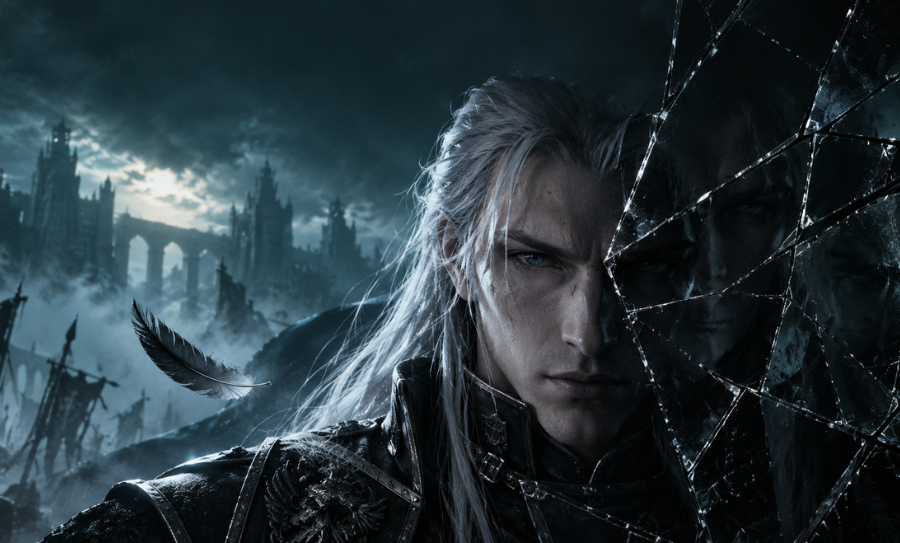
Understanding Goro Akechi psychology means understanding that his conflict was never really with Joker. It was with the mask he built to survive being unwanted.
The Persona That Wasn't a Choice
Akechi's public identity — likable, composed, quietly brilliant — isn't a strategy he adopts for fun. It's armor. Built in response to a childhood defined by rejection: an absent father, a mother lost to that rejection, and a system that only ever valued him for what he could perform, never for who he actually was.
That backstory reframes everything about his on-screen charm. The "Prince Detective" persona isn't Akechi expressing himself. It's Akechi surviving in a world that only ever wanted the performance. And the tragedy is that it works — everyone loves the mask. Almost no one asks about the person wearing it.
Envy as a Symptom, Not a Flaw
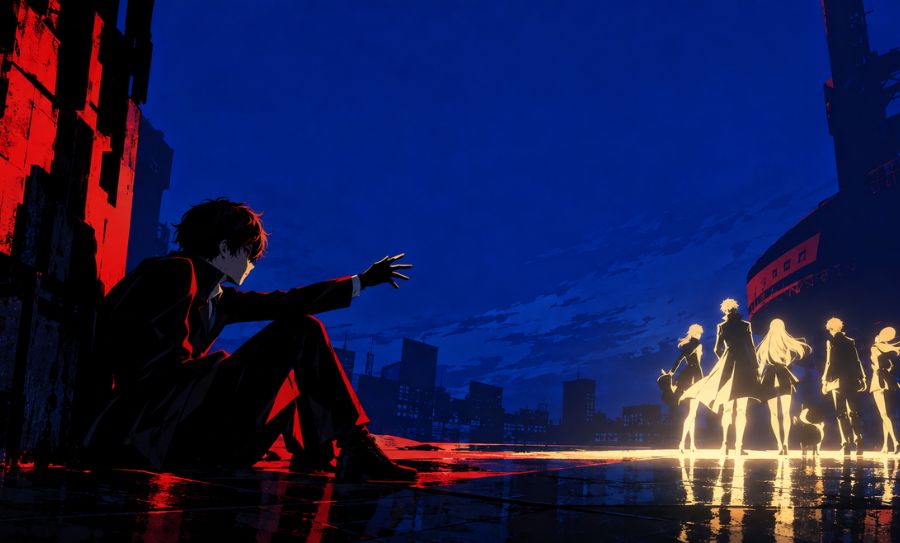
One of the most overlooked details in Akechi's arc is how directly his story parallels Joker's — and how differently the two of them turn out. Both are outsiders. Both are, in different ways, discarded by systems that were supposed to protect them. But where Joker builds genuine connections and draws strength from them, Akechi isolates, convinced that closeness is either a liability or a lie.
That contrast is the key to understanding his rage. Akechi doesn't hate Joker because Joker is more powerful. He hates him because Joker represents proof that survival didn't have to mean isolation — that there was another way through the same pain, and Akechi didn't take it. Envy, in this context, isn't a character flaw bolted on for drama. It's a direct consequence of trauma processed alone versus trauma processed with support.
Redemption or Recognition?
This is where Persona 5's writing gets genuinely sophisticated. It would be easy to frame Akechi's arc as a redemption story — a villain slowly earning forgiveness. But his actions never fully ask for that. What he seems to want, underneath the manipulation and the violence, isn't absolution. It's recognition. He wants someone to see past the persona and acknowledge the person underneath it, without conditions.
That distinction matters for how players read his final choices. A character chasing redemption is trying to become someone new. A character chasing recognition is trying to finally be seen as who they already were, buried under a mask built for other people's approval. Akechi's story leans hard toward the second reading — which is part of why it lands as tragedy rather than triumph.
Why Akechi's Arc Still Resonates
Akechi's story works because it isolates something a lot of people quietly recognize: the exhaustion of being loved for a performance instead of a self. Building a public-facing version of yourself to survive rejection is common enough that his arc doesn't feel like a JRPG plot device — it feels like an exaggerated mirror.
That's ultimately what separates a memorable antagonist from a forgettable one. Akechi isn't compelling because of his power set or his twist reveal. He's compelling because his internal conflict — performance versus authenticity, isolation versus connection — is one most players have felt in some smaller, quieter form in their own lives.
The Question His Story Leaves Behind
Persona 5 never fully resolves whether Akechi wanted redemption or simply wanted to be understood — and that ambiguity is the point. His arc isn't built to give players a clean answer. It's built to make them sit with the discomfort of a character who did terrible things for entirely human reasons.
So the real question isn't whether Akechi deserved forgiveness. It's whether anyone ever gave him the chance to be seen as something other than the mask he built to survive.





Deja una respuesta