
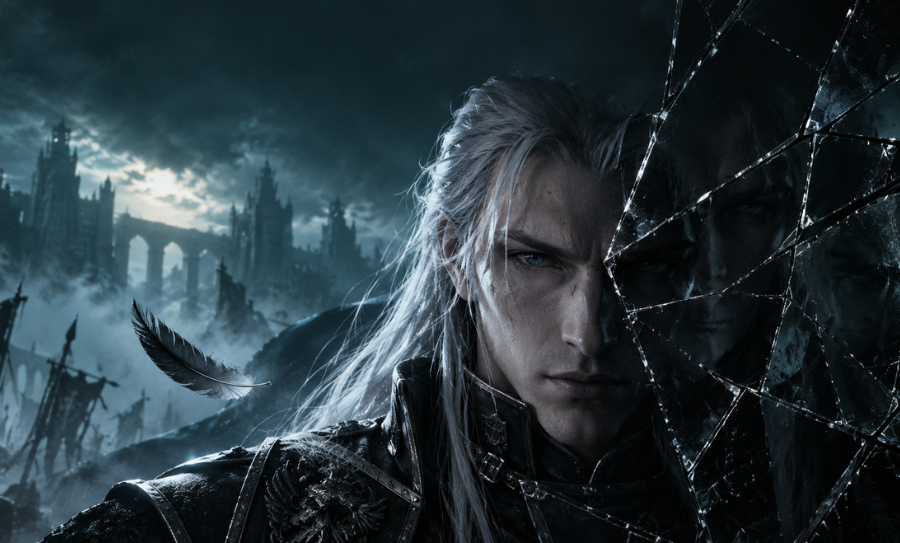
Is Sephiroth a Villain, or Just a Broken Mirror? The Psychology of Final Fantasy VII’s Icon
Ask any gamer to name the most iconic villain in Final Fantasy VII, and the answer comes instantly: Sephiroth. The silver hair, the katana, the god complex. He's become shorthand for "cool, unstoppable evil" — a poster on a teenager's wall, a boss fight burned into muscle memory, a meme template.
But that reputation flattens one of the most carefully built psychological tragedies in video game writing. Sephiroth isn't a villain because he's powerful. He's a villain because his entire sense of self was built on a lie — and the moment that lie collapsed, so did he.
If you actually want to understand is Sephiroth a villain in the traditional sense, you have to stop looking at what he does and start looking at what was done to him first.
The Perfect Soldier Was Never Real
Sephiroth spends the first act of his story as the platonic ideal of a hero. He's the strongest SOLDIER operative Shinra has ever produced, admired by peers, feared by enemies, and completely secure in his identity as a self-made prodigy.
That security was engineered. Sephiroth was never simply "gifted." He was the product of the Jenova Project — grown, quite literally, using the cells of an alien parasite, without his knowledge or consent. Every ounce of his strength, every reason people respected him, traced back to something he never agreed to be.
This is the part of his story that gets lost in the memes: Sephiroth's sanity was never independent from the myth Shinra built around him. He wasn't guarding a secret. He didn't know there was one.
The Moment Identity Becomes a Weapon
The turning point in Sephiroth's arc isn't a battle. It's a discovery. When he finally learns the truth about his origin — reading the lab reports meant to stay buried in the Nibelheim reactor — something breaks that can't be repaired with victory or vengeance.
It's worth sitting with why this specific kind of trauma is so destabilizing. Losing a fight, losing a loved one, even losing your body — these are things a person can, in theory, survive and rebuild from. But losing the story you told yourself about who you are is different. There's no "self" left to do the rebuilding.
That's the psychological horror underneath Final Fantasy VII's plot. Sephiroth doesn't become a monster because he wants power. He becomes a monster because reality itself became something he could no longer live inside.
Villain, or Symptom?
This reframes the entire question. Is Sephiroth a villain, or is he a warning label for what happens when identity is manufactured rather than earned?
Compare him to villains built purely on greed or cruelty — characters who chose darkness with a clear head and a working sense of self. Sephiroth doesn't fit that mold. His descent reads less like a decision and more like a diagnosis: a perfect hero discovering his entire life was a script someone else wrote, and choosing to burn the script — and everyone connected to it — rather than live inside the wreckage.
None of this erases the destruction he causes. Nibelheim burns. Aerith dies by his hand. The horror is real, and the game never asks players to excuse it. But understanding why it happens is what separates a shallow villain from an unforgettable one. Sephiroth's tragedy isn't that he's evil. It's that he was never given the chance to find out who he was without the lie holding him together.
Why This Story Still Resonates
Nearly three decades after Final Fantasy VII's release, Sephiroth's arc still lands because the fear underneath it is universal, even if the sci-fi packaging is extreme. Most people have, at some point, built an identity around a story — a role, a relationship, a version of themselves other people needed them to be — only to feel that story crack under scrutiny.
Sephiroth is what happens when that crack becomes total. He's not a cautionary tale about ambition. He's a cautionary tale about foundations — about what happens when the ground you built yourself on was never solid to begin with.
The Real Question
So, is Sephiroth a villain? Mechanically, in the plot of Final Fantasy VII — yes, without question. But narratively, he's something more interesting: a portrait of what happens when a perfect hero realizes his whole life was a script he never agreed to write.
The next time you fight him, or watch someone else fight him, ask yourself the question the game never fully answers: was Sephiroth a monster who chose darkness — or a broken puppet executing a destiny he never had the power to refuse?





Deja una respuesta